Hoof disease can quickly derail the health and performance of cattle and horses. The best prevention strategy combines clean environments, early inspection, and proactive hoof sanitation. Simple soaking practices using solutions like Klean Hoof can help reduce microbial pressure and maintain strong, healthy hooves in working and performance animals.
Why Hoof Health Matters More Than Most Owners Realize
For cattle and horses alike, hoof health directly affects mobility, feed efficiency, weight gain, and performance. Animals with painful hooves eat less, move less, and experience increased stress, which can quickly reduce productivity.
Common hoof diseases include:
- Thrush (horses)
- White Line Disease
- Digital Dermatitis (Hairy Heel Warts)
- Foot Rot in cattle
- Sole abscesses
- Cracks and separation in the hoof wall
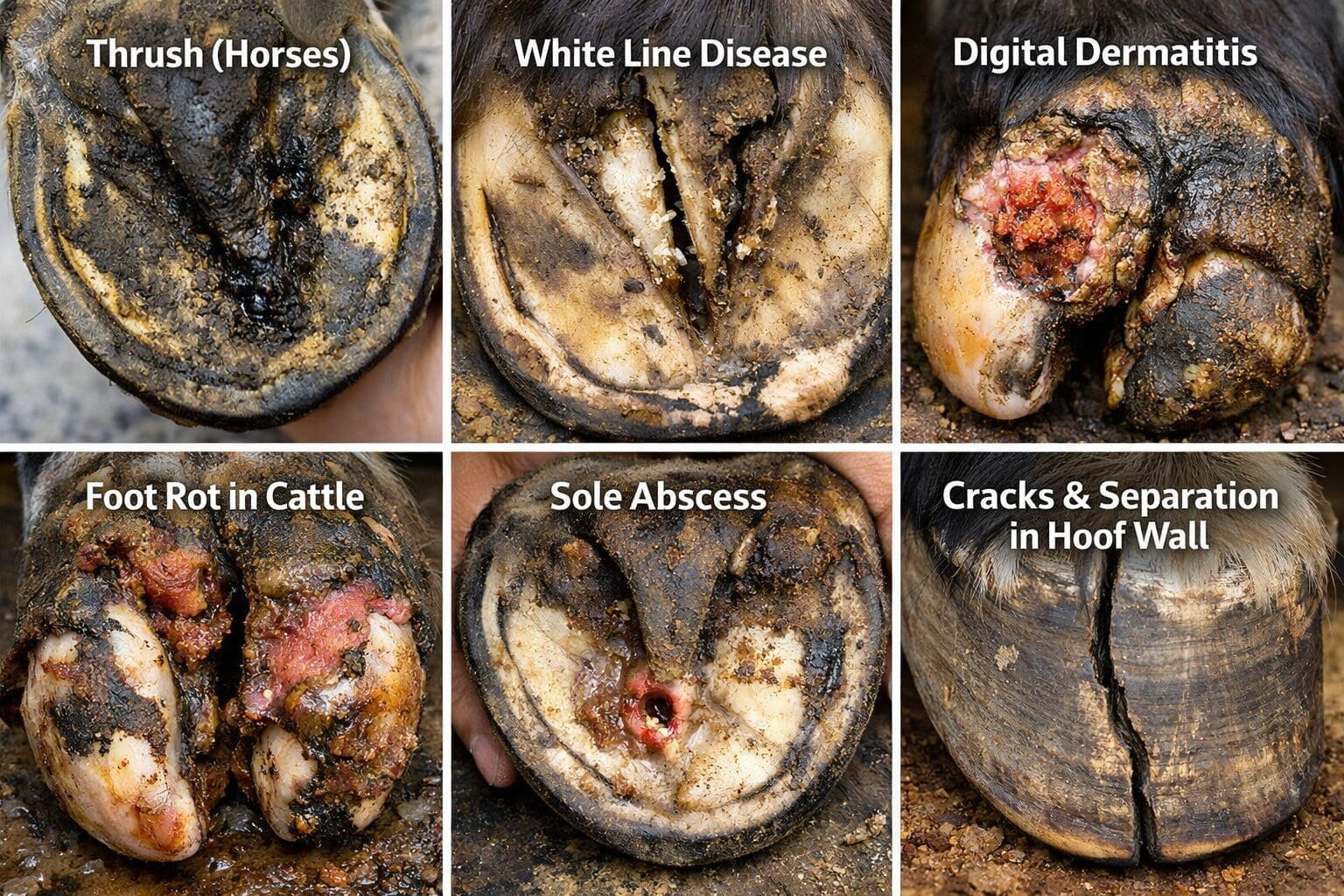
Most of these conditions share a common cause: microbial buildup in wet, contaminated environments.
When manure, mud, and bacteria accumulate around the hoof, microbes begin attacking soft tissues and structural hoof material. Preventing that microbial buildup is the single most important step in hoof disease prevention.
The Most Common Causes of Hoof Disease
Hoof disease rarely happens overnight. Instead, it usually develops when several conditions occur together.
1. Constant Moisture
Wet bedding, muddy pastures, and standing water soften the hoof structure. Soft hooves allow bacteria and fungi to penetrate deeper tissues.
2. Manure Contamination
Manure contains large microbial loads. When hooves remain in contact with manure-rich mud or bedding, disease-causing bacteria multiply rapidly.
3. Poor Airflow in Barns
Poor ventilation traps moisture and microbial odors, allowing bacteria to thrive in hoof contact areas.
4. Lack of Routine Hoof Care
Overgrown hooves trap debris and moisture, creating perfect conditions for infection.
5. Cross-Contamination
Animals traveling to:
- Auctions
- Rodeos
- Barrel racing events
- State fairs
- Shared pastureland
are frequently exposed to unfamiliar pathogens.
Without preventative sanitation, those microbes can be brought home and spread to other animals.
Daily Management Practices That Prevent Hoof Disease
Maintain Dry Bedding and Walkways
Clean, dry bedding significantly reduces microbial growth. High-traffic areas such as:
- Barn entrances
- Water trough areas
- Feeding lanes
should be scraped or refreshed regularly to prevent manure buildup.
Improve Drainage in Pastures and Pens
Standing water softens hooves and encourages bacteria. Gravel lanes, proper grading, and drainage channels reduce exposure.
Schedule Regular Hoof Trimming
Routine trimming keeps hooves properly shaped and prevents cracks or separations where bacteria can enter.
Typical schedules:
-
Horses: every 6–8 weeks
-
Cattle: inspection several times per year depending on herd management

Perform Frequent Visual Inspections
Look for early signs of trouble:
- Foul odor around the hoof
- Black or soft frog tissue (thrush)
- Redness or swelling near the coronary band
- Limping or shortened stride
- Separation in the white line
Catching problems early often prevents major infections.
Why Preventative Hoof Soaking Works
One of the most effective ways to prevent hoof disease is routine antimicrobial soaking.

Soaking works because it:
- Penetrates cracks and crevices
- Neutralizes bacteria and fungi
- Flushes debris from damaged tissue
- Supports natural healing processes
Preventative soaks are especially useful after:
- Mud exposure
- Long transport
- Stock shows
- Livestock auctions
- Wet pasture conditions
A simple soak can dramatically reduce microbial load before infections develop.
Using Klean Hoof for Preventative Hoof Care
Klean Hoof tablets provide an easy way to create a highly effective hoof sanitation solution in seconds.
Just one tablet dissolved in 32–64 ounces of water produces a powerful antimicrobial soak suitable for both treatment and maintenance care.
Benefits of Klean Hoof Soaks
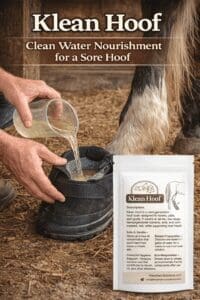
Klean Hoof solutions help:
- Neutralize bacteria and fungal contaminants
- Clean deep hoof crevices
- Support recovery from early hoof damage
- Reduce odor associated with hoof infections
- Maintain healthier hoof tissue between trimmings
The solution is ideal for:
- Horses after muddy rides or competitions
- Dairy cattle exposed to wet milking areas
- Beef cattle in muddy feedlots
- Animals returning from auctions or shows
Because the solution is freshly activated when mixed, it provides strong sanitation without harsh chemical residues.
When to Use Preventative Hoof Soaks
Preventative soaking can be used as part of routine animal care.
Recommended times include:
- After heavy mud exposure
- Following long transport
- When introducing new animals to the farm
- After trimming or hoof maintenance
- During wet seasonal conditions
Even occasional preventative soaking can dramatically reduce hoof disease risk.
A Proactive Hoof Health Strategy for Small Farms
For small farms and traveling horse owners, hoof disease prevention should follow three principles:
- Reduce moisture and manure exposure
- Inspect hooves frequently
- Use preventative sanitation when risk increases
Portable hoof sanitation solutions like Klean Hoof tablets make it easy to apply proactive care anywhere—from the home barn to stock shows and rodeos.
Preventative care is always easier and less expensive than treating advanced hoof infections.
FAQs
1. What causes hoof rot and hoof infections in cattle?
Hoof infections typically occur when bacteria enter softened hoof tissue through cracks or abrasions. Wet environments, manure contamination, and poor drainage significantly increase infection risk.
2. How often should hooves be soaked to prevent disease?
Routine soaking is most useful after muddy exposure, travel, or high-risk environments. Many owners incorporate occasional preventative soaks during wet seasons or after events where animals may contact unfamiliar microbes.
3. Can hoof soaking help early hoof problems?
Yes. Early soaking helps reduce bacterial populations, clean infected tissue, and support natural healing before conditions become severe.